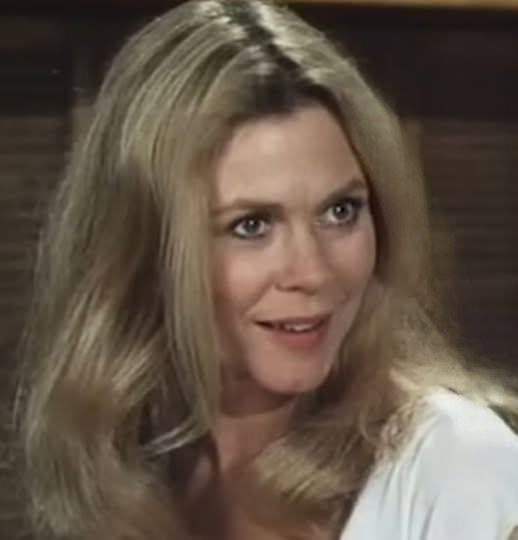
Long before the age of high-budget, visually extravagant television, where every show seems to require blockbuster effects and endless digital enhancements, there was a quieter kind of revolution. It unfolded in the modest, wood-paneled living room of a suburban home, starring a woman who looked like the ideal 1960s housewife but could upend reality with a simple twitch of her nose. That show was Bewitched, and it didn’t just entertain—it subtly, brilliantly redefined what television could do. By weaving pure, unfiltered fantasy into the familiar framework of a domestic comedy, the series created a cultural landmark that remains as fresh and influential today as it was during its original run.
At the heart of this revolution was Samantha Stephens, a character who perfectly captured the contradictions of her era. She was a witch living in a world that demanded conformity, a woman whose true power was both a secret to guard and a tool to wield when the stifling expectations of suburban life became too much. Her signature nose-twitch was far more than a special effect; it was the show’s pulse. It served as both a punchline and a declaration of autonomy, an instant signal to the audience that the ordinary rules of the world were about to bend, shatter, or disappear entirely. That small, repetitive gesture became a sophisticated shared language between the screen and the viewer—a promise of mischief, temporary escape, and, most importantly, the assertion of control in a world that often felt oppressively rigid.
While the premise of Bewitched was inherently playful, the real magic—the kind that required technical ingenuity and artistic vision—happened entirely behind the scenes. The writers and production crews of the mid-1960s weren’t working with the limitless digital tools available to today’s creators. They operated on tight budgets, forced to invent the language of television illusion from the ground up. They relied on mechanical trickery, meticulously timed jump cuts, and practical effects that demanded endless patience and precision. These techniques, which might seem outdated today, possess a tactile, handcrafted quality that modern CGI often lacks. They feel charming rather than cheap because they bear the visible marks of the human hands that created them. Every floating toaster and disappearing vase was a miniature puzzle solved under the pressure of a network deadline, and that creative urgency translates into the genuine warmth that radiates from every episode.
The brilliance of the show also lay in its clever use of conflict. By framing the supernatural as a domestic disruption, Bewitched allowed viewers to explore the tensions of marriage, societal expectations, and the pressure to conform. Samantha’s husband, Darrin Stephens, served as the human anchor for the audience, embodying the sometimes-clueless perspective of the status quo, while Samantha represented the hidden, untamed potential within every person who felt like they were playing a role rather than living authentically. The show was, in many ways, a sophisticated metaphor for the struggle for individuality in a society that preferred its citizens to remain quiet, predictable, and unremarkably ordinary.
Over the decades, countless spin-offs and reboots have attempted to recapture the magic of the original series. They’ve often borrowed the premise—the idea of a magical being navigating mundane human life—but they almost universally miss the delicate balance of warmth, wit, and quiet rebellion that made the original so special. Modern iterations tend to over-explain the magic, turning it into a spectacle or a cliché rather than a tool for character exploration. They lack the dry, observational humor that allowed Bewitched to be both a laugh-out-loud sitcom and a subtle social commentary. The original show understood that the magic was secondary to the characters; if you didn’t care about the people, the floating furniture was just noise.
This is why, even decades after the final episode aired, the reruns don’t just feel like a stale exercise in nostalgia. They feel eerily alive, as if the spell never truly ended. When you watch Samantha walk into a room, you aren’t just seeing a relic from the 1960s; you’re witnessing a performer who understood that television, at its best, is about the connection between the artist’s intent and the viewer’s imagination. The show invites the audience to imagine a world where the constraints of physics and social norms are entirely optional, and that invitation remains as tempting today as it was during the height of the Cold War.
Furthermore, we must consider the enduring legacy of the show’s aesthetic. The vibrant, colorful world of the Stephens household offered a stark contrast to the often grim news cycles of the era. It provided a technicolor escape where problems could be solved with a whisper and a smile. Even when the problems were complex, the show maintained a level of poise and comedic timing that set the standard for the half-hour format. It taught generations of viewers that a story doesn’t need to be cynical to be clever, and it doesn’t need to be loud to be revolutionary.
In today’s media landscape, where content is consumed and discarded at an unprecedented pace, there is something deeply comforting about returning to the simple, effective magic of Bewitched. It reminds us that technology and budget are not the foundations of great storytelling; empathy, irony, and the occasional well-timed nose-twitch are far more powerful tools in the hands of a true artist. The show remains a testament to the idea that when you treat your audience as intelligent partners, capable of understanding nuance and irony, you can create something that outlasts the technology of its time.
Ultimately, the magic of Bewitched was never really about witchcraft. It was about the human desire to be seen, to be understood, and to have the power to change one’s circumstances when the world feels too confining. It was about the joy of secret knowledge and the comfort of finding a partner who accepts you, even when you’re capable of turning them into a frog. We keep returning to the reruns because we’re still searching for that same feeling—the comfort of the familiar, the thrill of the unexpected, and the enduring, magical reminder that the ordinary rules are meant to be bent. As long as there are people who feel trapped in a world that’s too rigid, there will always be a place for the suburban witch and her twitch, keeping the spell alive for anyone willing to look a little closer.