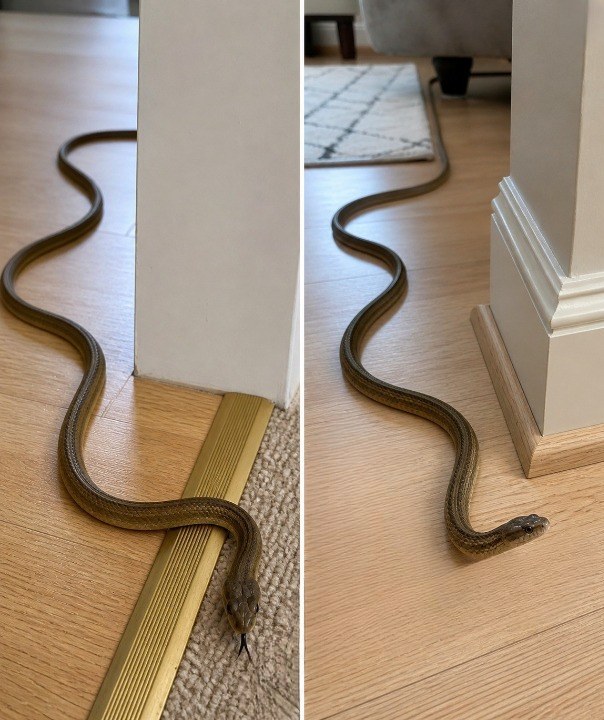
Picture yourself walking through a dim hallway in your own home, reaching for the light switch, and suddenly coming face to face with a snake. It’s one of the most unsettling situations anyone can experience. The shock alone can send your heart racing and your mind spiraling. Whether you live in a quiet rural area or a busy city, snakes can sometimes find their way indoors. They aren’t there to scare you. They’re simply searching for food, warmth, or a safe place to hide. Understanding why this happens is the first step toward staying calm and handling the situation the right way.
To deal with a snake in your home, it helps to know what draws them inside in the first place. Most of the time, snakes enter houses because they’re following their basic survival instincts. Food is a major factor. If your home has mice, insects, or other small pests, it can attract snakes looking for an easy meal. These pests leave scent trails that snakes can detect, leading them straight into your living space. On top of that, snakes are always looking for safe, quiet places to hide. Areas like basements, crawl spaces, laundry rooms, and cluttered storage zones give them exactly what they need to stay undisturbed.
Weather also plays a big role. When outdoor conditions become extreme, snakes look for a stable environment. During intense heat, they may seek out cooler, damp places like bathrooms or basements. When temperatures drop, the warmth inside your home becomes appealing. In these cases, your house isn’t a target. It’s simply a temporary refuge from harsh conditions outside.
If you ever come across a snake indoors, fear can easily take over and lead to risky decisions. It’s important to remember that not all snakes are dangerous. Many are non-venomous and actually help control pests. Still, since most people can’t identify species on the spot, it’s safest to treat every snake with caution and keep your distance.
The most important thing you can do in that moment is stay calm. Take a step back and avoid sudden movements or loud reactions. Do not try to touch, catch, or kill the snake, since that’s when most bites happen. If it’s safe, close off the area to limit where the snake can go. Make sure children and pets are moved far away from the situation. Once everyone is secure, contact animal control or a wildlife professional. They have the tools and experience to handle the situation safely.
After the snake is removed, the next step is prevention. Start by checking the outside of your home for gaps or cracks where a snake could enter. Seal openings around doors, windows, foundations, and pipes. Keeping your home clean and free of clutter also removes hiding spots. Outside, trim bushes, mow the lawn regularly, and clear away piles of wood or debris.
Another key step is controlling pests. If you remove the food source, you remove the reason snakes come in. You can also consider natural deterrents like certain plants, but the most effective protection is making sure your home is properly sealed and maintained.
In the end, dealing with a snake in your home is about understanding why it’s there, staying calm in the moment, and taking practical steps to make sure it doesn’t happen again.