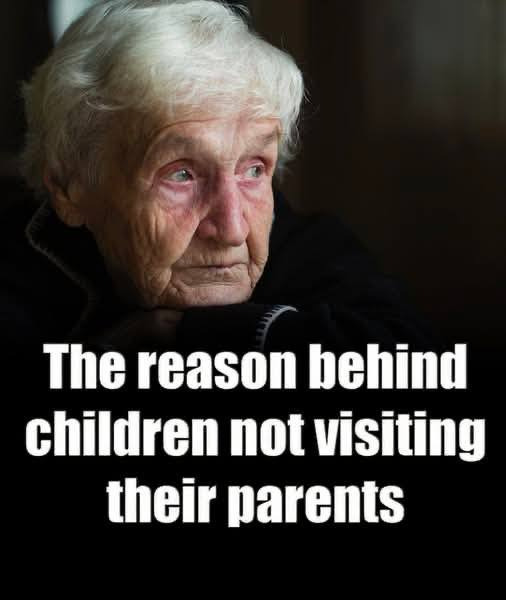
Few emotional experiences hurt a parent more deeply than the silence of an adult child. At first, the distance often arrives gradually. Phone calls become shorter and less frequent. Text messages take longer to receive replies. Holidays become complicated. Visits shrink from weekends to hurried afternoon appearances until eventually months or even years pass with barely any meaningful contact at all.
For many parents, this silence feels devastating and confusing.
They replay memories endlessly searching for the exact moment everything changed. They wonder whether they failed somehow or whether modern life simply pulled their children away forever. Society teaches us that family bonds are permanent and unbreakable, but the painful reality is that relationships between parents and adult children are far more fragile than most people want to admit.
And often, the truth behind the distance is complicated.
Sometimes the separation begins with nothing more dramatic than adulthood itself. Once children leave home, they are suddenly swallowed by responsibilities that consume nearly all of their emotional and mental energy. Careers demand more hours. Romantic relationships require attention and compromise. Bills pile up. Children of their own arrive, bringing exhaustion that few people truly understand until they experience it themselves.
Modern adulthood leaves many people emotionally overwhelmed.
In that chaos, maintaining close communication with parents can slowly stop feeling automatic. Calls get postponed. Messages remain unanswered longer than intended. What once felt effortless suddenly begins requiring emotional energy they barely have left after surviving their own daily lives.
Often, the distance is not rooted in hatred.
It is rooted in exhaustion.
Adult children are not always intentionally abandoning their parents. Sometimes they are simply trying to keep themselves afloat while juggling responsibilities that never stop multiplying. Physical distance only intensifies the problem. Moving to another city, state, or country can quietly transform temporary busyness into emotional disconnection before either side fully realizes what is happening.
But busy schedules are not always the real reason.
In many families, silence grows from emotional wounds that were never properly acknowledged.
Relationships between parents and children are built over decades, and children do not magically forget how they felt growing up simply because they become adults. If a child spent years feeling criticized, emotionally dismissed, controlled, manipulated, or unseen, adulthood often becomes the first time they realize they are finally allowed to create distance.
For some adult children, stepping away is not cruelty.
It is self-protection.
When interactions with parents consistently leave someone anxious, emotionally drained, guilty, or emotionally small, they eventually begin building boundaries in order to preserve their mental health. In those situations, silence is not always punishment.
Sometimes it is survival.
This becomes especially true in families where parents struggled with narcissism, emotional immaturity, or controlling behavior. Many adult children spend years sacrificing their own emotional needs to maintain family peace. Then one day they realize adulthood gives them the ability to choose different patterns.
And once they experience peace away from constant emotional tension, returning becomes much harder.
Miscommunication also quietly destroys countless parent-child relationships. Parents and adult children often operate under completely different assumptions about what healthy contact should look like.
One parent may avoid calling too often because they fear being intrusive, while the child interprets that silence as emotional indifference.
Another parent may constantly call, text, and demand updates believing it shows love, while the child experiences it as pressure or emotional suffocation.
Without honest conversations about expectations and emotional needs, both sides slowly create stories about each other that may not even be true. Small misunderstandings harden into resentment over time. Eventually, neither person knows how to bridge the gap anymore.
Then there is the issue most families avoid entirely:
Unresolved emotional history.
Every family carries hidden pain beneath the surface. Old arguments. Childhood humiliations. Broken trust. Favoritism. Emotional neglect. Criticism disguised as “good parenting.” Conversations that should have happened years ago but never did.
When those wounds remain unaddressed, adult children often begin avoiding family interactions because returning home emotionally transports them back into old versions of themselves they worked hard to escape.
A short visit can suddenly feel emotionally exhausting.
A holiday dinner can reopen wounds that never fully healed.
And if parents insist on pretending the past never happened, the relationship often becomes emotionally impossible to maintain.
Many parents desperately want closeness with their adult children while refusing to acknowledge the pain those children experienced growing up. They want connection without accountability. But healing rarely works that way.
Adult children usually do not need perfect parents.
They need emotionally honest ones.
Still, distance between parents and children does not always mean the relationship is permanently destroyed.
Sometimes silence is not the end.
Sometimes it is an invitation for change.
Many families eventually reconnect when both sides become willing to approach each other differently. Not through guilt, demands, or emotional pressure, but through humility, accountability, and patience.
Rebuilding trust rarely happens through dramatic speeches or emotional confrontations. More often, it begins quietly. A thoughtful message without expectations attached. A genuine apology without defensiveness. A willingness to listen without interrupting or minimizing another person’s experience.
The process is slow because trust damaged over decades cannot be repaired overnight.
Parents often must learn to stop viewing their adult children as extensions of themselves and begin seeing them as independent adults with their own boundaries, perspectives, pain, and emotional realities.
And adult children sometimes must accept that their parents are flawed human beings shaped by their own unresolved wounds, limitations, and fears.
Neither side is entirely innocent.
Neither side is entirely evil.
Most families are simply collections of imperfect people carrying emotional baggage while desperately trying to love each other the best way they know how.
Healing only becomes possible when both people stop focusing solely on who was “right” and begin focusing instead on whether the relationship itself still matters enough to fight for differently.
For parents sitting in painful silence waiting for a call that never comes, the hardest truth may be this:
Love alone does not automatically sustain adult relationships.
Respect does.
Emotional safety does.
Listening does.
Accountability does.
And if reconnection ever happens, it usually begins the moment a parent stops demanding closeness and starts creating an environment where closeness finally feels emotionally safe again.
Adult children do not usually return because they are pressured into guilt.
They return because they feel understood.
Because they feel accepted.
Because they finally believe they can show up honestly without being judged, controlled, criticized, or emotionally diminished.
The relationship may never look exactly the way it once did during childhood.
But sometimes, after enough honesty and healing, it can evolve into something healthier than it ever was before.
Not a relationship built on obligation.
But one built on mutual respect between two adults finally learning how to truly see each other for the first time.