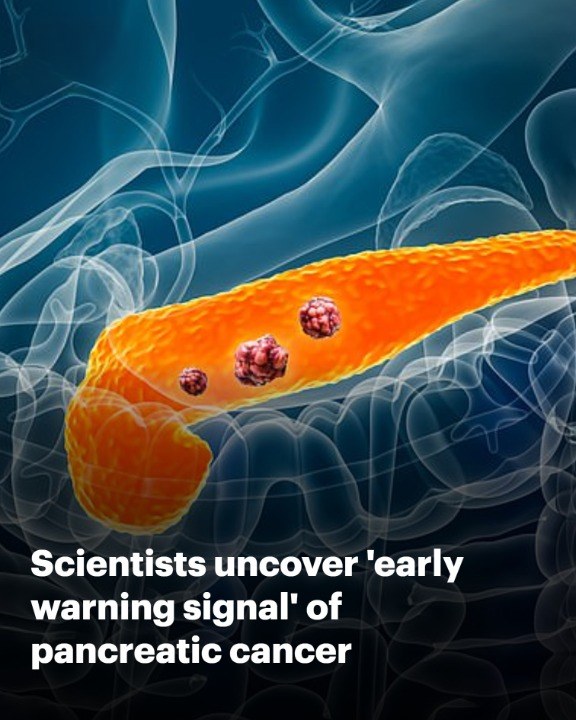
Researchers have made a promising breakthrough that could lead to earlier detection of pancreatic cancer, one of the deadliest and most difficult cancers to diagnose. In a recent study published in the medical journal Gastroenterology, scientists reported the discovery of what may be an early biological signal that appears in the body years before noticeable symptoms of the disease begin. According to the study, precancerous cells in the pancreas start to organize themselves into small groups within the tissue. Researchers described these groups as tiny “neighbourhoods” of abnormal cells. These clusters appear to interact with nearby immune cells, which normally protect the body by identifying and destroying harmful or abnormal cells. However, instead of triggering a strong immune response, the precancerous cells seem to interfere with the immune system’s ability to recognize them as dangerous. This allows the abnormal cells to remain undetected and continue developing. Scientists refer to this process as immune evasion, and it may occur long before a tumor becomes large enough to cause symptoms or be detected through traditional methods. Because pancreatic cancer often develops silently, many people are diagnosed only after the disease has already reached an advanced stage, which makes treatment far more difficult. As a result, survival rates for pancreatic cancer remain extremely low, with only a small percentage of patients surviving longer than a year after diagnosis.
The research was conducted by a team of scientists at the Hebrew University of Jerusalem, who used advanced imaging techniques to closely examine pancreatic tissue samples from both laboratory mice and human patients. Their findings revealed that the same patterns of cell clustering and weakened immune response were present in human tissue as well, suggesting that this early warning signal may play a significant role in how the disease begins and progresses. Immunologist Sharona Tornovsky-Babeay, who helped lead the research, explained that understanding how these precancerous lesions form and communicate with surrounding immune cells could help doctors identify people who are at higher risk of developing pancreatic cancer. Detecting these early changes may eventually allow physicians to intervene before the disease fully develops into aggressive cancer. The pancreas, a gland located deep within the abdomen behind the stomach, plays a crucial role in digestion and blood-sugar regulation. Unfortunately, its location in the body makes tumors extremely difficult to detect during routine examinations or imaging tests. Scientists are still studying the exact causes of pancreatic cancer, but several factors are known to increase the risk, including smoking, excessive alcohol consumption, obesity, and certain dietary habits. Researchers hope that discoveries like this one will lead to new screening tools that can identify pancreatic cancer much earlier than is currently possible, improving treatment options and ultimately saving lives.