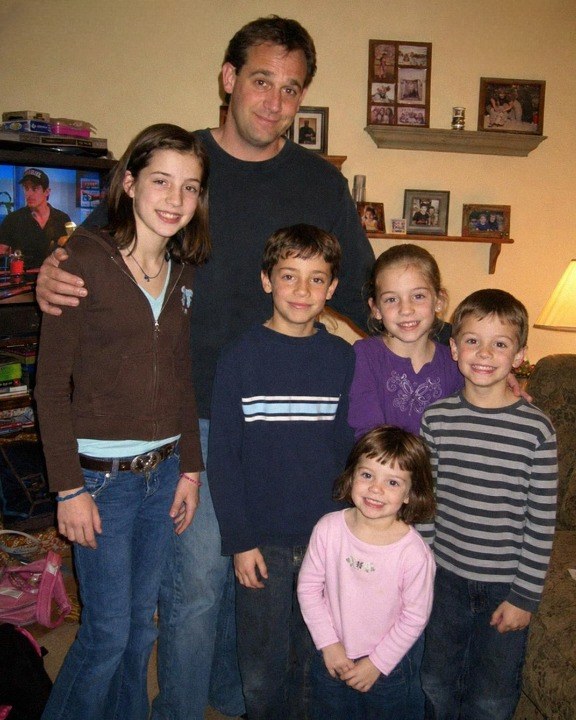
Rain poured heavily during my stepfather’s funeral. Then, barely an hour later, his attorney handed us a locked wooden box filled with personal letters, and the opening sentence in mine revealed why one of my sisters had spent years avoiding the man the rest of us lovingly called Dad.
The rain began moments before Thomas’s casket was lowered into the ground, which somehow felt fitting for him. He would have called it inconvenient, maybe even cracked a terrible joke about it.
That was exactly who Thomas was.
If the roof leaked, he would stick a bucket underneath and jokingly call it an “indoor water installation.” As I stood there in black shoes sinking into the muddy cemetery grass, I kept thinking how strange it was that grief and memories of his awful humor could exist together at the same time.
And yet, somehow, they did.
I clasped my hands tightly together and watched his casket disappear slowly into the earth.
Beside me, Michael kept clearing his throat over and over like he was fighting tears. Mara hugged herself tightly. Noah stared straight ahead with the expression of someone using every ounce of strength not to fall apart in public.
I closed my eyes and whispered silently:
“Thank you, Dad. Thank you for the little notes you folded into our lunch napkins. Thank you for teaching yourself how to braid hair using library books. Thank you for taking in five children who did not share your blood and never once making us feel like outsiders.”
My mother married Thomas when I was five years old.
The first time I met him, he crouched down in front of me and handed me a pink teddy bear missing one of its button eyes.
“Your mother says you’re very particular,” he told me with a smile. “This bear seems pretty demanding too. I figured the two of you might understand each other.”
I took the bear from him, and he smiled warmly.
“Hi there, Pumpkin.”
Two years later, my mother died unexpectedly after a car accident on a rain soaked road.
Everyone assumed Thomas would let my grandparents take me in. My grandparents arrived speaking softly and practically, carrying themselves with the certainty older adults have when they believe a decision has already been made.
Thomas listened patiently to every word. Then he looked over at me sitting on the couch in mismatched socks, clutching my teddy bear tightly under one arm.
“She’s my daughter,” he said simply.
That ended the discussion.
Thomas was not my biological father.
But he was my father in every way that ever mattered.
And if anyone had suggested there was a difference, he would have stared at them as if they had just offered him spoiled milk.
When I was nine, Thomas adopted twins named Michael and Mara from a shelter.
Two years later, he became a foster parent to Noah and Susan, a brother and sister, and eventually adopted them too.
None of us shared the same beginning in life, but Thomas somehow made every one of us feel like we belonged to the same home.
Back at the cemetery, I opened my eyes when Michael leaned closer and quietly said, “Susan came.”
I turned and saw her standing near the back beneath a red umbrella, pale and motionless in a black coat.
I had left her a message about Thomas’s death, just in case she chose to come.
Thomas never stopped waiting for her.
Three nights before his heart attack, he told me softly, “Leave the porch light on, Pumpkin. Just in case.”
Noah nudged me gently. “Go talk to her before she disappears again.”
Susan looked older than someone barely twenty should look.
Not physically.
It was more like life had worn parts of her spirit down.
“You came,” I whispered.
“He was still my father,” she replied quietly. “The man who raised all of us.”
Behind me, I could already feel Michael and Mara becoming tense.
Noah had two children now, and Thomas still packed snacks for them in little containers even after age made his hands tremble. To Noah, love and loyalty tasted like peanut butter crackers.
Mara stepped closer.
“That’s all you have to say? He waited years for you, Susan.”
Michael added bitterly, “He called you. Sent birthday cards. Left the porch light on every single night.”
Pain flashed across Susan’s face.
“I did what I had to do,” she murmured.
Mara turned away in frustration.
I had only seen Thomas cry a handful of times in my entire life, and one of those moments happened two years earlier when I found him sitting alone on the porch with Susan’s note trembling in his hand.
The note simply read:
“I’m leaving. I’m staying with a friend. I need to live life my own way.”
It happened one week after Susan’s eighteenth birthday.
I remember asking Thomas in confusion, “What do you mean she’s gone?”
He handed me the note and stared out across the yard.
“I mean she’s gone.”
“Why?”
“Not my story to tell, Christie.”
Later, when Susan finally answered one of my phone calls, I spent more time yelling than listening. I accused her of destroying our father emotionally.
The only thing she said before hanging up was:
“You don’t know Thomas the way I do.”
Now, as rain dripped from Susan’s umbrella at the cemetery, a man wearing a charcoal coat approached us.
“I’m Mr. Elwood, Thomas’s attorney,” he introduced himself. “Thomas instructed me that if anything happened to him, I was to gather all five of you together afterward. He left something behind for each of you.”
Susan’s grip tightened around the umbrella handle.
Mara asked quietly, “What exactly did he leave us?”
The attorney looked at all five of us before answering.
“A box.”
Mr. Elwood’s office smelled like coffee, old paperwork, and the kind of sadness lawyers organize for a living.
A small locked wooden box sat on his desk.
He handed me the key because Thomas had specifically requested that I be the one to open it. The tiny metallic click sounded unnaturally loud in the silent room.
Inside were five envelopes.
One for each of us.
Every name was written in Thomas’s shaky handwriting from his final years.
We each found separate corners of the office or turned away slightly, pretending privacy still existed between siblings.
I opened mine.
“My sweet girl,” the letter began, “Susan left because she learned something about me that none of the rest of you ever knew.”
My breath caught instantly.
I had to wipe my eyes and reread the words because everything blurred together through tears.
Thomas explained that Susan had once discovered an old heart shaped locket hidden inside his desk drawer.
Inside the locket was a photograph of Thomas standing beside a young woman.
Susan recognized her immediately.
It was her mother.
Then came the truth that nearly made my knees buckle.
Across the room, Noah was crying silently into his hand. Mara covered her mouth with both palms. Michael stared blankly at the page in front of him.
Susan had gone completely pale.
The moment she finished reading, she folded in on herself like something inside her had collapsed. She shoved the letter into her coat pocket and walked out without speaking.
“Susan!” I called after her.
I chased her outside.
She made it as far as the large oak tree across the street before breaking completely. She bent over, hands on her knees, sobbing so violently it looked physically painful.
Not polite crying.
Not quiet tears.
The kind that erupts when years of certainty suddenly shatter.
I wrapped my arms around her before she could pull away.
“I made a horrible mistake, Christie,” she cried into my shoulder.
The others caught up moments later, surrounding us in silence.
Susan pulled Thomas’s letter from her pocket with trembling hands and held it out toward me.
“You read it,” she whispered. “I can’t do it again.”
So I read it aloud.
Thomas explained that the woman in the locket was not Susan’s mother in the way she believed.
She was his younger sister, Elise.
Years earlier, Elise had run away from home at seventeen and disappeared for a long time. Eventually, she reached out to Thomas asking for help. But by the time he arrived at her apartment in the city, Elise had already died from illness, and her two children, Noah and Susan, had entered foster care.
Thomas brought them home immediately.
When Susan later found the locket and confronted him, he tried to explain everything, but she was too angry and hurt to stay and listen.
After that, every year the explanation became harder and heavier for him to say aloud until eventually he ran out of time completely.
Susan broke down again.
“He never abandoned my mother,” she whispered through tears. “He wasn’t the man I thought he was. Thomas was my uncle… and he came back for us.”
Noah sat down hard on the wet curb.
Mara whispered softly, “Oh, Thomas…”
Michael covered his mouth and stared upward at the gray sky.
And all I could think about was how Thomas had spent years leaving the porch light on every night for a daughter who believed he had betrayed her mother, carrying that painful misunderstanding alone because fear stole his courage at exactly the wrong moment.
“Come home with us,” I told Susan.
She shook her head weakly.
Then Noah quietly said the one thing that finally broke through to her.
“Thomas would be furious if this family fell apart in a parking lot after everything.”
Susan let out one cracked laugh through her tears.
Then she nodded.
“Take me home,” she whispered.
That evening, all five of us returned together to Thomas’s house.
The porch light was still glowing above the door.
Susan stopped at the bottom step and stared at it as if Thomas himself might suddenly open the door and say, “About time, sweetheart. I made soup.”
None of us rushed her.
Thomas raised us well enough to understand that some silences need space.
Inside, the house smelled like coffee, cedarwood, and the cinnamon mints Thomas kept hidden inside every jacket pocket.
Michael instinctively headed into the kitchen because grief makes some people need tasks.
Mara found old photo albums.
Noah stood quietly in the middle of the living room crying the restrained kind of tears men learn to hide after becoming fathers themselves.
Susan sat on the couch holding the locket in both hands.
“I hated him for so long,” she whispered.
“You were young and hurting,” I replied.
“But I still left.”
“Yes. You did.”
She looked down at the locket.
“Do you think he forgives me?”
I squeezed her hand gently.
“I think he forgave you long ago.”
Michael walked in carrying mugs of coffee.
“Please,” he said softly, “Thomas would’ve forgiven a bank robbery if someone looked guilty enough afterward.”
That finally pulled a small laugh from all of us.
Mara opened one of the photo albums.
There we all were in matching Christmas pajamas Thomas bought on clearance every year while pretending they were expensive designer sets.
Noah grinning with missing front teeth.
Susan wearing crooked bangs she had cut herself with craft scissors.
Me covered in cake frosting with my arm wrapped around Thomas’s neck.
Mara laughed tearfully.
“Why did he style his hair like that?”
Michael snorted. “Because he treated hair gel like a personality trait.”
Even Susan smiled at that.
Three days later, all five of us returned to the cemetery together.
This time the ground was dry and the sky clear.
Fresh flowers rested beside Thomas’s grave, and Michael immediately accused Mara in the gentlest tone imaginable. He was right. She had brought them.
Susan knelt first.
She placed one hand against the headstone and cried openly without trying to hide anything anymore.
“I’m sorry,” she whispered. “I’m so sorry, Thomas.”
I set the small lantern I had brought onto the grass and switched it on.
When Susan looked at the warm light, she broke down again because it reminded her of the porch light Thomas always left burning for her.
That was who he had always been.
Thomas spent his entire life teaching children who were not his by blood that home is never something you have to earn.
Home is simply the place that keeps the light on waiting for you.
We stood there quietly for a long time.
Then Susan reached for my hand.
And when we finally walked away from the cemetery together, all five of us moved like real siblings.
Because after everything we had been through, that’s exactly what we were.
Blood was never what made us family.
Love was.
And real love stays.