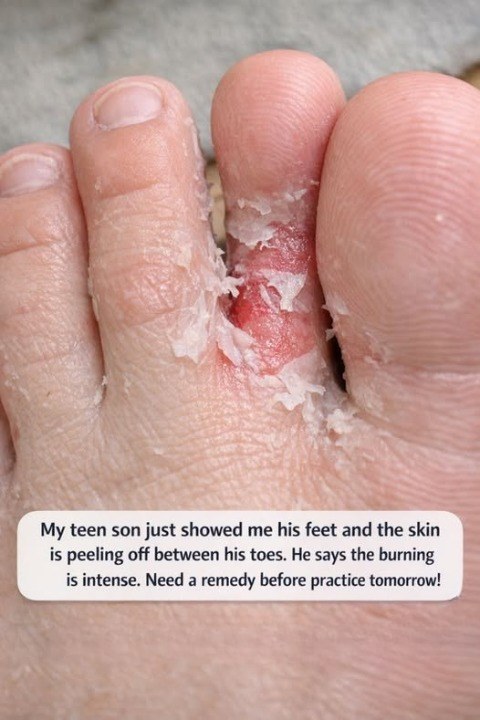
Late one evening, my teenage son walked slowly into the kitchen looking completely miserable. The second he sat down, I could tell something was seriously bothering him. Without saying much, he pulled off his sneakers and peeled away his thick athletic socks. What I saw immediately made my heart race. The skin between his toes was peeling badly, exposing raw pink areas underneath, and he flinched the moment I tried to examine it more closely. He admitted that his feet had been burning and itching for several days, but now the discomfort had become almost unbearable. With an important sports practice scheduled the very next morning, panic instantly set in for both of us.
At first, I worried it might be something severe, but after doing quick research, the symptoms pointed very clearly toward athlete’s foot. This extremely common fungal infection, medically known as tinea pedis, thrives inside warm, damp environments like sweaty athletic shoes and thick socks. For active teenagers constantly running around in sneakers, the inside of a shoe becomes the perfect environment for fungus to spread. Once it starts growing, it attacks the outer layer of skin and feeds on keratin, which leads to peeling, itching, cracking, burning, and irritation between the toes. If left untreated, the skin can split open, bleed, and even develop bacterial infections on top of the fungus.
The good news was that athlete’s foot is highly treatable when handled early and correctly.
I immediately put together a simple but aggressive care routine to calm the irritation and get him back on his feet as quickly as possible. The first thing we focused on was cleaning the area gently. I had him wash his feet carefully using cool water and mild antibacterial soap. Using hot water would have only increased the burning sensation and irritated the skin further, so keeping the water cool helped soothe the inflammation almost immediately.
Drying his feet completely afterward turned out to be one of the most important steps. Fungus loves moisture, so I carefully used a clean towel and made sure every area between his toes was fully dry. Even small traces of dampness can allow the infection to keep spreading.
Next came the antifungal treatment itself. We used an over the counter antifungal cream containing active ingredients like terbinafine or clotrimazole. After applying a thin layer over the irritated areas, he finally experienced noticeable relief from the intense burning. However, I quickly learned that consistency matters far more than speed. Even when symptoms begin improving, the treatment must continue for the full recommended period, often several weeks, to fully eliminate the fungus and prevent it from returning.
But treating the skin alone was not enough. The environment causing the infection also needed to change.
The following morning, I made sure he wore clean moisture wicking athletic socks specifically designed to pull sweat away from the skin. These socks help keep feet much drier during sports activities. I also insisted he change out of sweaty socks immediately after practice instead of sitting around in damp gear.
His shoes needed serious attention too. We began rotating between two different pairs so each pair had a full day to air out and dry completely before being worn again. We also sprayed the inside of his sneakers with antifungal shoe spray to kill lingering spores that could cause reinfection. Looking back, those old damp shoes had practically become a breeding ground for fungus.
One thing I emphasized strongly was avoiding walking barefoot in public locker rooms, showers, or pool areas. These damp surfaces are where athlete’s foot spreads rapidly from person to person. Wearing flip flops or shower sandals acts as a simple but powerful layer of protection.
What surprised me most during the experience was the emotional side of it all. Teenage boys can become extremely embarrassed about physical issues like this, especially something involving peeling skin or odor. I made sure to reassure him that athlete’s foot is incredibly common among athletes and active teens. It was not something dirty or shameful. Once he realized this was a normal sports related issue and not some horrifying condition, he became much more cooperative with the treatment routine.
Thankfully, our quick response made a huge difference. Within a short time, the burning eased significantly, the peeling started healing, and he was able to attend practice comfortably the very next day.
At the same time, I stayed alert for warning signs that would require medical attention. Severe swelling, spreading redness, pus, fever, or worsening pain can signal complications that need professional care. Fortunately, none of those appeared.
The entire experience taught me something important as a parent. Sometimes the fastest way to solve a scary problem is not panic, but quick action, consistency, and understanding the root cause before it spirals into something worse.