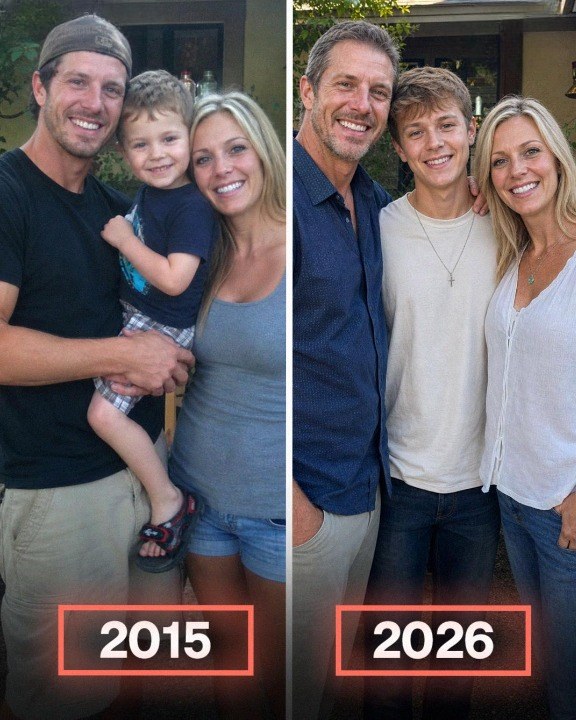
My husband went behind my back and had our son’s DNA tested, then came home holding the results like he had finally uncovered some hidden truth. Our son placed the envelope in my hands, shaking, and before I even finished reading the first line, I could feel our family starting to fall apart.
I was standing in the kitchen when the front door opened. My 16-year-old son, Rick, walked in, with my husband Will right behind him.
Their expressions were blank, heavy, like something terrible had already happened and neither of them knew how to say it.
“What’s going on?” I asked.
They didn’t respond. Instead, Rick stepped forward and handed me an envelope.
“Mom,” he said quietly, “just… read it.”
The envelope had already been opened. That was the first thing I noticed. The second was that Will wouldn’t meet my eyes.
I pulled out the paper inside, and my heart started racing.
“DNA test results?” I looked at Will. “You went behind my back—”
“Good thing I did,” he said coldly. “Otherwise, we never would’ve found out the truth.”
I looked down at the page, and nothing about it made sense.
“This isn’t possible… it can’t be.”
“The results are clear,” Will said, folding his arms. “Now I know what you’ve been hiding all these years.”
Eleven years earlier, when Rick was only five, Will had stood in front of me with a look I had never seen before.
“He doesn’t look like me,” he said.
I laughed it off. “Kids change constantly at that age.”
But he didn’t laugh.
Over the following weeks, he kept bringing it up, until I started to think something was wrong with him.
Then one night, his tone turned cold.
“He’s not mine. I want a DNA test.”
We had fought so hard to have Rick.
Years of doctor visits, tests, and disappointment. Then finally, IVF worked. I got pregnant. It felt like everything we had hoped for had finally come true.
And then he questioned it.
“Are you serious?” I shouted, tears forming. “After everything we went through, you think I would betray you like that?”
“He looks nothing like me!” Will snapped.
That argument nearly destroyed us. After hours of going back and forth, I finally drew a line.
“No test. If you don’t trust me, then there’s nothing left between us.”
Somehow, we stayed together.
He never brought it up again, but standing there now with that envelope in my hands, I realized he had never let it go.
“No,” I said firmly. “I didn’t hide anything. These results have to be wrong.”
Will shook his head. “You’re unbelievable. All these years, you made me feel like I was crazy, and now that the truth is right in front of you, you’re still denying it.”
I looked down again at the line that made my stomach drop: Will is excluded as Rick’s biological father.
“Mom?” Rick whispered. “Is it true? Did you…”
“No!” I met Will’s eyes. “I never cheated on you.”
“Don’t stand there and lie when the proof is in your hands.”
“I swear, I don’t understand how this could have happened,” I said, my voice trembling.
Rick made a small, broken sound. “Dad… maybe she’s right. Maybe there’s a mistake.”
Will turned toward him but couldn’t look him in the eye. That hurt more than anything. He could accuse me, but he couldn’t face the boy who had called him Dad his whole life.
“I’m sorry,” he said to Rick. “I’m sorry you had to find out like this, but it’s better to know the truth than live in a lie.”
Then he turned to me. “I won’t keep living in your lie.”
He walked down the hallway, and I followed.
“What are you saying?”
He pulled a duffel bag from the closet and started packing.
“You’re leaving?” I asked.
He zipped it up. “I’ve been lied to for years. I’m not going to let you keep fooling me.”
I stepped in front of him. “Look at me. I have never cheated on you. Something is wrong here.”
But he picked up the bag and walked out without another word.
Rick was still in the kitchen, holding the DNA results I had left behind.
“Mom,” he said softly, his voice taking me back to when he was little. “Was he right?”
I crossed the room and held his face in my hands. “Listen to me. I don’t know why the test says this, but I do know one thing. I did not betray this family.”
“Then why does it say that?”
“I don’t know. But I’m going to find out.”
That night, I pulled out every file from the fertility clinic.
Appointment cards. Consent forms. Receipts. Treatment schedules. I spread them across the table until it was covered in years of effort and hope.
At first, everything looked normal. Clinical. Routine.
Then I noticed something strange.
A correction sticker on one document. A handwritten patient ID over another number.
And suddenly, I remembered that day.
The clinic had been crowded. A nurse had apologized more than once for the delay. Will had been impatient, checking his watch.
I had been sitting in a paper gown, cold and trying not to hope too much.
And I remembered overhearing someone say, “No, that one is for the other couple.”
At the time, it meant nothing.
Now, it felt like everything.
The next morning, I called the clinic as soon as they opened.
The receptionist responded calmly. “Ma’am, those records are archived. It may take some time to review them.”
I closed my eyes. “My husband secretly tested our son, and the results say he’s not the father. That child was conceived through your clinic. I need those records checked immediately.”
“I understand this is upsetting.”
“No, you don’t,” I said. “My husband thinks I cheated. My son thinks his life is a lie. Either you review those records now, or I walk in with a lawyer.”
By that afternoon, they called back.
“Ma’am, we need you to come in.”
The next morning, I sat in a private office with an administrator and a doctor who looked visibly shaken.
They handed me a formal letter filled with legal language, dates, and procedure details.
I scanned it until I found the line that mattered.
The genetic mismatch is consistent with a clinic-side sample identification error.
I read it three times.
Then I looked up. “This sentence is the difference between my son believing he was wanted and my husband thinking he was proof of betrayal.”
The administrator folded her hands. “We are prepared to cooperate with any legal action.”
I placed the letter in my bag. “You will.”
That weekend, we had planned Rick’s birthday dinner.
I almost canceled it.
But then I thought about all the silent doubts, the sideways glances, the way Will’s mother would study Rick’s face like she was searching for proof he belonged.
For eleven years, suspicion had been sitting at our table.
Now, the truth could take its place.
Will’s parents arrived first. His mother hugged Rick tightly, giving me a strained look.
Will came last. He looked exhausted, like he hadn’t slept.
Dinner barely lasted ten minutes before his mother spoke.
“We just want what’s best for Rick. We love him, even though…”
I set my fork down. “There is no ‘even though.’ And I can prove it.”
I placed the DNA test on the table.
Then I laid the clinic letter beside it.
Will frowned. “What is that?”
“The part you didn’t wait for,” I said. “The DNA test is correct. You are not Rick’s biological father. But everything else you assumed is wrong.”
“That doesn’t make sense,” Will said.
I picked up the letter. “Rick was conceived through fertility treatment we both went through. The clinic reviewed their records and found a sample mix-up during that time.”
Silence filled the room.
I turned to Will. “I didn’t lie. I didn’t bring another man’s child into this family and pretend otherwise. I trusted the same clinic you trusted.”
He read the letter, and I watched his certainty disappear piece by piece.
When he sat down again, it looked like he collapsed into the chair.
“There was a mistake,” he said weakly.
“No,” I said. “Say all of it.”
“Clara…”
“Say it.”
Rick was watching him. So was everyone else.
Will lowered his head. “Clara didn’t cheat. I was wrong.”
The words hung in the air. Too late, but still necessary.
“You let me live under suspicion for eleven years,” I said. “You let your family doubt me. You made our son feel questioned in his own home. And the moment you thought you had proof, you walked away without looking any deeper.”
Will’s father rubbed his face. His mother started crying.
Rick looked at him and said quietly, “You told me you needed to know if I was yours.”
Will looked devastated. “I’m sorry. I was wrong.”
I believed he meant it. But that didn’t make it enough.
“You don’t get to doubt me for years in private, then apologize once in public and think that balances it out.”
He flinched. “I know.”
“No. I don’t think you do.”
For the first time in years, I didn’t feel like I was trying to hold everything together on my own.
I felt like a mother finally standing up where she should have all along.
That night, Rick sat next to me on the couch, his shoulders slumped, his eyes red.
After a long silence, he asked, “Does this change who I am?”
I took his hand. “No. It changes what happened. Not who you are.”
He leaned against me, and for the first time since that envelope appeared, I could finally breathe.
I don’t know what comes next.
The clinic’s lawyers have reached out.
Will has sent more apologies than I can count. Some sincere, some written in the middle of sleepless nights filled with regret.
I’ve answered almost none of them. Rick has replied to a few.
But one thing I know for certain is this: I didn’t imagine the hurt. I didn’t overreact. And I didn’t owe endless patience to a doubt that slowly poisoned my home.
I spent years believing peace mattered more than being fully trusted.
I was wrong.
A family cannot survive when one person is always quietly being put on trial.