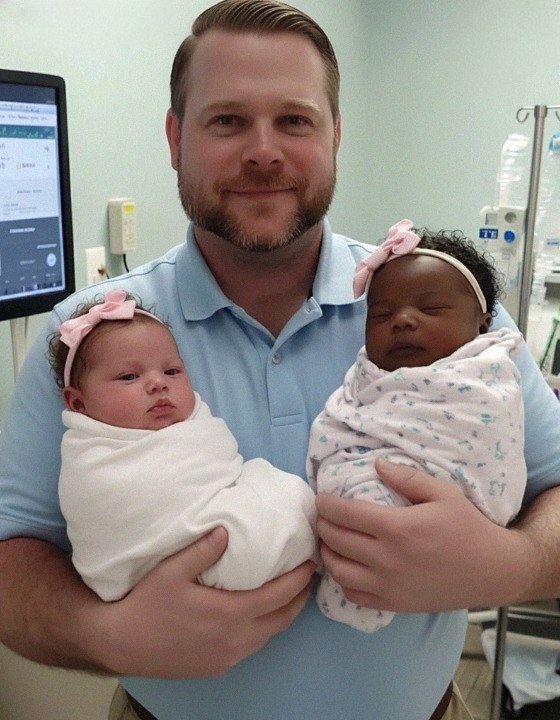
When I went to the hospital to bring my wife and our newborn twins home, I was met with something I never could have imagined—Suzie was gone, and all she left behind was a note filled with questions I couldn’t answer. As I struggled to care for my daughters and piece together what had happened, I uncovered painful truths that nearly tore my family apart.
On the drive to the hospital, the balloons bounced gently in the passenger seat, and I couldn’t stop smiling.
I was finally bringing my girls home.
I imagined Suzie’s face when she saw the nursery, the dinner I had prepared, the framed photos waiting on the mantel. She deserved happiness after months of discomfort, morning sickness, and dealing with my mother’s constant interference.
Everything we had dreamed of was about to begin.
I greeted the nurses as I hurried toward Suzie’s room. But the moment I stepped inside, I froze.
Our daughters were there, sleeping peacefully in their bassinets.
But Suzie wasn’t.
At first, I thought she had stepped out for a moment. Then I noticed the note.
My hands trembled as I unfolded it.
“Goodbye. Take care of them. Ask your mother WHY she did this to me.”
I read it again. And again.
It didn’t change. It didn’t make sense.
A chill spread through me as I stood there, unable to move.
What did she mean? Why would she leave? She had been happy… hadn’t she?
A nurse walked in with paperwork.
“Good morning, sir, here are the discharge—”
“Where’s my wife?” I interrupted.
She hesitated. “She checked out this morning. She said you were aware.”
“I wasn’t,” I said, my voice unsteady. “Where did she go? Did she say anything? Was she upset?”
The nurse frowned. “She seemed… quiet. Are you saying you didn’t know?”
I shook my head, gripping the note tightly.
I left the hospital in a daze, holding my daughters while everything around me felt unreal.
Suzie was gone.
The woman I loved, the person I thought I understood, had disappeared without warning. All I had left were two tiny babies, broken plans, and a message that pointed toward my mother.
When I pulled into the driveway, my mom, Mandy, was already waiting on the porch, smiling brightly with a casserole in her hands.
“Oh, let me see my grandbabies!” she said, hurrying toward me. “They’re beautiful, Ben, absolutely beautiful.”
I stepped back, holding the car seat protectively.
“Not yet, Mom.”
Her smile faded. “What’s wrong?”
I shoved the note toward her.
“This is what’s wrong. What did you do to Suzie?”
Her expression changed instantly. Her hands shook as she read the note, her face turning pale.
“Ben, I don’t know what this is about,” she said. “She’s always been emotional. Maybe she—”
“Don’t lie to me!” I snapped. “You’ve never liked her. You’ve always criticized her, undermined her—”
“I was trying to help!” she cried, tears filling her eyes.
I turned away, unable to believe her. Something had happened between them—something serious enough to drive Suzie away.
That night, after putting Callie and Jessica to bed, I sat alone at the kitchen table, the note in one hand and a glass of whiskey in the other.
My mother’s words echoed in my mind, but I couldn’t ignore the question that wouldn’t leave me alone.
What did you do?
I thought back to every family gathering, every sharp comment my mother had made toward Suzie—things I had brushed off at the time.
Now I saw them differently.
I started searching through Suzie’s things, hoping for answers.
In her jewelry box, I found a folded piece of paper.
It was a letter.
Written by my mother.
My heart pounded as I read it.
“Suzie, you will never be good enough for my son. You trapped him with this pregnancy, but you won’t fool me. If you care about them, leave before you ruin their lives.”
My hands shook as the truth hit me.
This was why she left.
My mother had been tearing her down behind my back all along.
I thought back to every moment I had dismissed, every time I had ignored the tension.
How could I have missed it?
It was late, but I didn’t care. I went straight to the guest room and knocked until my mother opened the door.
“How could you?” I demanded, holding up the letter. “All this time, I thought you were just overbearing—but you’ve been bullying her for years.”
She went pale. “Ben, listen—”
“No. You listen. Suzie left because of you. You made her feel worthless. And now she’s gone, and I’m here trying to raise two babies on my own.”
“I was protecting you,” she said weakly. “She wasn’t good enough—”
“She’s the mother of my children,” I said firmly. “You don’t get to decide that.”
Then I looked her in the eyes.
“You need to leave.”
She stared at me in disbelief. “You don’t mean that.”
“I do.”
An hour later, she was gone.
The weeks that followed were overwhelming.
Sleepless nights, endless crying, exhaustion that never seemed to end.
But every quiet moment brought Suzie back into my thoughts.
I contacted her friends and family, searching for any clue. Most of them hadn’t heard from her. But one of her friends hesitated before speaking.
“She felt trapped,” Sara said. “Not because of you—but because of everything. The pregnancy… your mom. She once told me your mom said the twins would be better off without her.”
The pain hit me all over again.
“Why didn’t she tell me?” I asked.
“She was scared,” Sara said softly. “She thought it might turn you against her.”
Time passed with no answers.
Then one day, I received a message from an unknown number.
It was a photo of Suzie holding the twins in the hospital.
Below it, a message:
“I wish I was the kind of mother they deserve. I hope you can forgive me.”
I tried calling. The number didn’t go through. My replies never delivered.
But it gave me hope.
She was out there. Alive.
And a part of her still missed us.
A year went by with no real leads.
On the twins’ first birthday, the joy was mixed with something heavy.
That evening, there was a knock at the door.
I opened it—and froze.
Suzie stood there.
She looked healthier, stronger… but still fragile in a way I recognized.
“I’m sorry,” she whispered.
I didn’t think. I just pulled her into my arms.
She broke down, crying against me, and for the first time in a year, I felt whole again.
In the weeks that followed, she told me everything.
The postpartum depression.
The pressure.
My mother’s words.
The feeling that she wasn’t good enough.
She left because she thought it was the only way to protect our daughters—and herself.
Therapy helped her find her way back.
“I didn’t want to leave,” she told me one night. “I just didn’t know how to stay.”
I took her hand.
“We’ll figure it out,” I said. “Together.”
And we did.
It wasn’t easy. Healing never is.
But love, patience, and the quiet joy of watching our daughters grow helped us rebuild what we had nearly lost.