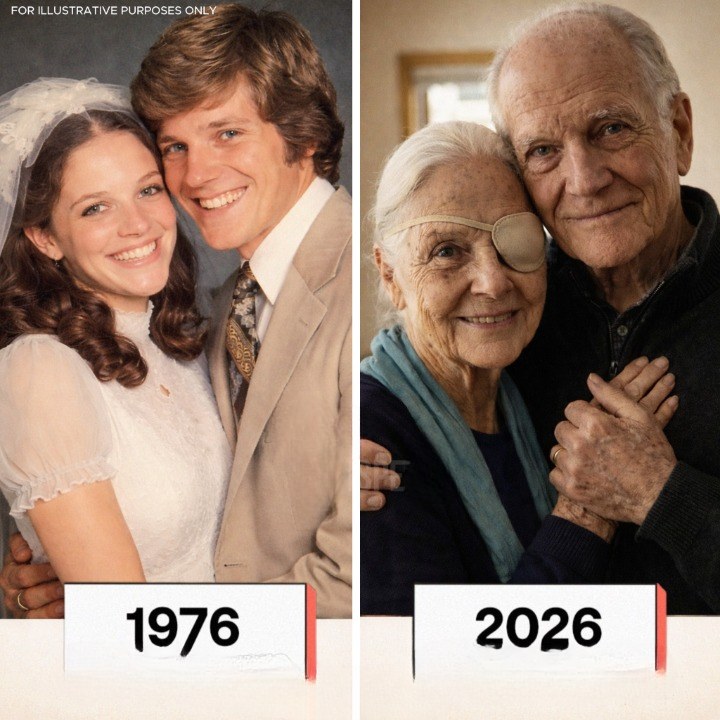
For almost half a century, I’ve spent every birthday in the same place—booth by the window at Marigold’s Diner. It was never about the food. It was about keeping a promise.
My name is Helen, and today I turned 85.
When you’re young, people say birthdays are a celebration. Cake, candles, laughter. I used to believe that too. But after you’ve lived long enough, birthdays stop feeling light. They carry weight. They remind you not just of how many years you’ve lived—but of who didn’t get to live them with you.
Still, ritual matters.
So that morning, just as I had every year since Peter died, I got ready slowly and carefully. I twisted my thinning hair, pressed on my wine-colored lipstick, and buttoned my coat all the way to my chin. Always the same coat. Always the same time. Noon exactly.
It takes me fifteen minutes to walk to Marigold’s now. It used to take seven. I pass the pharmacy, then the old bookstore that smells like dust and carpet cleaner. My legs ache, but I never rush. This walk deserves patience.
“You’re stronger than you think,” I whispered to myself before stepping outside.
I met Peter at Marigold’s when I was 35, on a Thursday I hadn’t planned to be there. I’d missed my bus and ducked inside to warm up. He was already seated in the corner booth, struggling with a newspaper and a coffee he’d spilled twice.
“I’m Peter,” he said cheerfully. “I’m clumsy, awkward, and mildly embarrassing.”
I should have walked away. Instead, I sat down.
He told me I had the kind of face people wrote letters about. I told him it was the worst line I’d ever heard. He laughed like he’d already won.
“Even if you leave and never want to see me again,” he said, “I’ll find you somehow, Helen.”
And somehow, I believed him.
We married a year later. That booth became ours—every birthday, without fail. Even after the cancer diagnosis. Even when he could barely finish a muffin. And when he died, I kept going alone. Because that booth still felt like the only place he might show up again.
But this year, something was wrong.
I froze just inside the door. In Peter’s seat sat a young man—mid-twenties, nervous posture, an envelope clenched between his hands. He stood abruptly when he saw me.
“Ma’am,” he said carefully. “Are you Helen?”
“Yes,” I replied. “Do I know you?”
He held out the envelope. “My grandfather asked me to give you this. His name was Peter.”
My breath left my body.
The envelope was worn, yellowed at the edges. My name was written in handwriting I hadn’t seen in decades—but I knew it instantly.
I didn’t sit. I nodded once, turned, and walked out.
At home, I made tea I never drank. I waited until nightfall, until the apartment settled into silence. Then I opened the envelope.
Inside was a letter, a photograph, and a ring wrapped in tissue paper.
The letter was unmistakably Peter.
He wished me a happy 85th birthday. He told me he’d chosen this age because it would’ve marked 50 years of marriage—and because his mother used to say that if you lived to 85, you’d lived long enough to forgive everything.
Then he told me his secret.
Before me, before our marriage, he’d had a son. Thomas. A chapter he thought was closed—until he found him again years later. He never told me. Not because he didn’t trust me, but because he didn’t want to burden me with unfinished pain.
Thomas had a son too. Michael. The young man at the diner.
Peter asked Michael to find me—on this day, at noon, in our booth.
“If grief is love with nowhere to go,” he wrote, “maybe this letter gives it a place to rest.”
The ring fit perfectly.
The photograph showed Peter laughing in the grass, a small boy pressed against his chest—safe, loved, exactly where he belonged.
I slept with the letter under my pillow that night.
The next day, I went back to Marigold’s.
Michael was already waiting.
We talked. About Peter. About music. About the way he hummed terribly in the shower. About the things that stay alive long after someone is gone.
“Do you hate him for keeping this from you?” Michael asked quietly.
I touched the ring. “No,” I said. “I think I love him even more for it. Which is infuriating.”
Before I left, I asked Michael if he’d meet me there again next year.
Then I asked if he’d like to come every week.
His eyes filled, but he smiled.
Sometimes love doesn’t end.
Sometimes it waits—patiently—in a familiar booth, wearing the face of someone new.