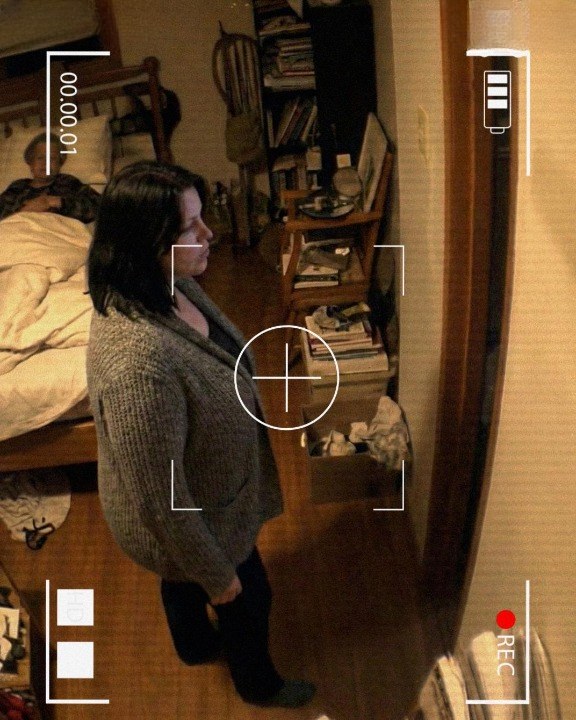
When Anna comes back home to care for her dying mother, she prepares herself for loss, not betrayal. But after the funeral, a hidden truth beneath the floorboards forces her to rethink everything she believed about family. Inside a house filled with memories, a single letter reshapes her understanding of legacy, love, and what truly belongs to her.
When my mom, Marlene, died three months ago, I never imagined grief would cling to me like a second skin.
I never expected betrayal to come with it.
I flew home from Chicago the moment I got the call that her condition had taken a turn. I didn’t hesitate. I left my job behind, packed a small suitcase, and told myself I’d only be gone for a week.
But deep down, I think I knew I wouldn’t be coming back quickly. Something in my chest shifted the instant I heard my sister’s voice on the phone.
The final six weeks of my mom’s life were quiet, heavy, and deeply personal in ways that will stay with me forever. I wasn’t just her caregiver. I was her witness.
I helped her organize bills and letters when her hands trembled too much. She kept everything in neat folders, and more than once I noticed she updated documents even when nothing seemed different.
“Just in case,” she always said.
Some days she talked. Other days, she simply stared out the window, watching the wind move through the trees while I sat beside her in silence.
My sister, Caitlin, came by only twice during those six weeks.
The first time, she brought a store-bought pie with the price sticker still on it and didn’t stay long enough to take off her coat.
The second time, she went through the hallway closet and took a box of old yearbooks along with some of Mom’s jewelry, saying she didn’t want them to “disappear.”
She barely looked at Mom either time.
“I just can’t see her like this,” she said at the door, shifting her weight nervously. “It’s too hard, Anna. I’m not strong like you.”
I wanted to say it was harder for Mom, but the words stuck in my throat. I was exhausted—too drained to argue and too raw to correct her.
People grieve differently, I reminded myself. Not everyone knows how to sit inside pain.
But I did.
After the funeral, I returned to Chicago feeling untethered, like something essential had been cut loose. I drifted through my apartment as if it didn’t belong to me anymore. Food spoiled in the fridge. Milk curdled. I stood in the kitchen staring at unopened coffee beans, realizing I didn’t even remember buying them.
“Pull yourself together,” I told my reflection. “Mom’s at peace. Now you have to find yours.”
But peace never showed up.
That night, Caitlin emailed me. The subject line was blunt and impersonal: “Mom’s Will.”
I opened it sitting cross-legged on my bed, tea forgotten beside me. The document loaded slowly, as if it were bracing itself.
Everything—Mom’s house, her savings, her belongings—had been left to my sister.
And me?
I wasn’t mentioned at all.
I scrolled back, certain I’d missed something. A clause. A footnote. Another page.
There was nothing.
I called Caitlin immediately, my voice shaking.
“Caity… I read the will. Is this real?”
“Yeah,” she said casually. “Mom wanted me to have everything. You’ve got your life, right? Your job, your place. You’re fine.”
Her voice was steady. Detached.
I stared into the night, trying to understand how everything had gone so wrong.
Had my mother truly believed I deserved nothing? That all those weeks meant nothing?
I had a job. An apartment. Yes. But I’d left it all for her. I was the one who sat with her when breathing hurt, who washed her hair in the sink because the tub was too dangerous.
That wasn’t “having a life.” That was love.
Weeks passed. I told myself to accept it. Maybe Mom thought Caitlin needed more help. Maybe I was meant to be the strong one.
But strength wears thin.
Then a family friend texted me.
“They’re listing the house, Anna. They’re tearing it down.”
I read it three times.
Tearing it down?
The porch swing. The height marks in the hallway. Mom’s chair by the window, still draped with her gray cardigan.
I felt hollow.
But beneath the shock, something else stirred. Protective. Certain.
I wouldn’t let it happen.
That night, I went through my finances. I emptied savings I swore I’d never touch. I sold designer bags I’d barely used.
By morning, I had enough.
I texted Caitlin an offer.
She replied within minutes.
“Cash? Perfect. You’re actually doing me a favor.”
That hurt more than I expected. I wired the money anyway.
When I got the keys, I stood on the porch, waiting to hear Mom’s voice telling me I was letting the cold in.
The house was silent.
Inside, the air was stale, the wallpaper peeling, furniture covered in linen sheets. I sank to the floor and cried.
The memories were loud.
I hired a small renovation crew. I didn’t want to erase anything. Just preserve it.
Mikey, the contractor, was kind and didn’t pry.
On the third day, he called me from the hallway.
“You should see this.”
He’d pulled up the carpet in Mom’s room. A floorboard was loose. Beneath it sat a thin, yellowed envelope.
My name was written on it.
I opened it with shaking hands.
Inside was a letter and a will.
Mom’s real will.
It was dated months earlier than the version Caitlin sent. It split everything evenly. House. Savings. Heirlooms.
Notarized. Signed.
Caitlin’s version wasn’t a mistake.
It was a forgery.
I called Mom’s lawyer immediately.
He warned me to be careful.
I invited Caitlin over the next evening.
We sat at the dining table. I placed the documents in front of her.
Her face changed as she read.
She accused me of digging. Of being jealous. Of making things difficult.
She said Mom always favored me.
“You could have been there,” I said quietly. “You chose not to be. And then you chose to steal.”
She left in anger.
The courts froze everything. The original will was enforced.
Later, in the attic, I found a shoebox full of Mom’s keepsakes. At the bottom was another letter.
“To Anna.”
She wrote that the house was mine. That I understood its heart. That Caitlin needed money, but I understood home.
“You’re the best part of me,” she wrote.
I cried until my chest ached.
Caitlin texted me days later. Then called. Then left flowers.
I didn’t respond.
Some things can’t be repaired. Not out of anger—but because truth changes everything.
Now I sit on the porch in the evenings with Mom’s mug in my hands. The house smells like fresh paint and memory.
Sometimes I speak out loud.
“You’d like it now,” I tell her.
And I don’t feel alone.
I feel like her heart is still part of the house itself.