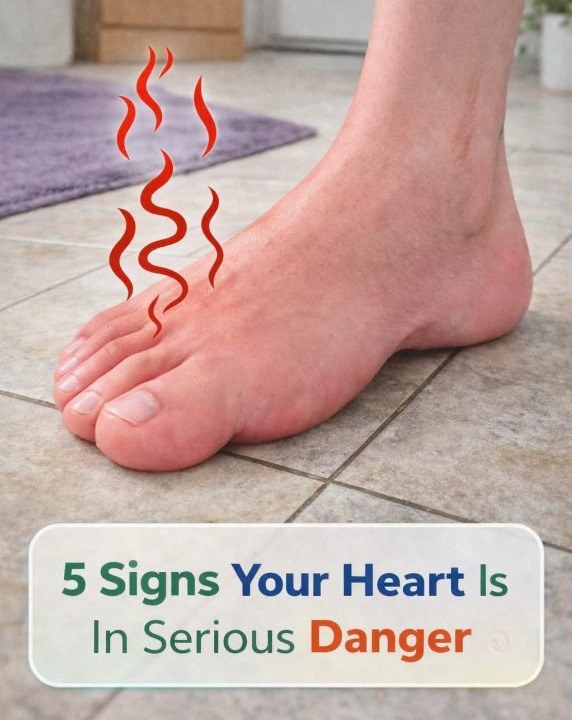
Conditions like Diabetes and Heart Disease are more connected than many people realize. When blood sugar levels remain high over time, they can damage blood vessels and nerves throughout the body. This affects circulation, especially in areas farthest from the heart—like your feet—making them an early place where warning signs can appear.
Over time, this damage can lead to Peripheral Neuropathy, which reduces feeling, and Peripheral Artery Disease, which limits blood flow. Together, these conditions can quietly signal that your heart and overall circulation are under stress.
 Warning Signs You Should Never Ignore
Your body often gives subtle clues before serious problems develop. Pay attention if you notice:
- Cold feet or legs – a sign of poor circulation
- Swelling in feet or ankles – could indicate fluid buildup or heart strain
- Pain or cramping while walking – often linked to reduced blood flow
- Slow-healing cuts or wounds – especially on the feet
- Numbness or tingling – possible nerve damage
- Changes in skin color (pale, bluish, or darkened areas)
These symptoms may seem minor at first, but they can reflect deeper cardiovascular issues that need attention.
 Why This Matters
Your heart is responsible for delivering oxygen and nutrients throughout your body. When circulation is compromised, even small injuries can become serious, and underlying conditions may go unnoticed until they worsen.
 What You Can Do
Taking action early can make a major difference:
- Keep blood sugar levels under control
- Stay physically active, even with light daily movement
- Eat a balanced, heart-healthy diet
- Avoid smoking
- Check your feet regularly for cuts, swelling, or changes
- Schedule routine medical check-ups
 The Bottom Line
Your feet can reveal what your heart is going through. Don’t ignore the signs—listening to your body early can help prevent serious complications later.
If you’re noticing any of these symptoms, it’s important to consult a healthcare professional as soon as possible.